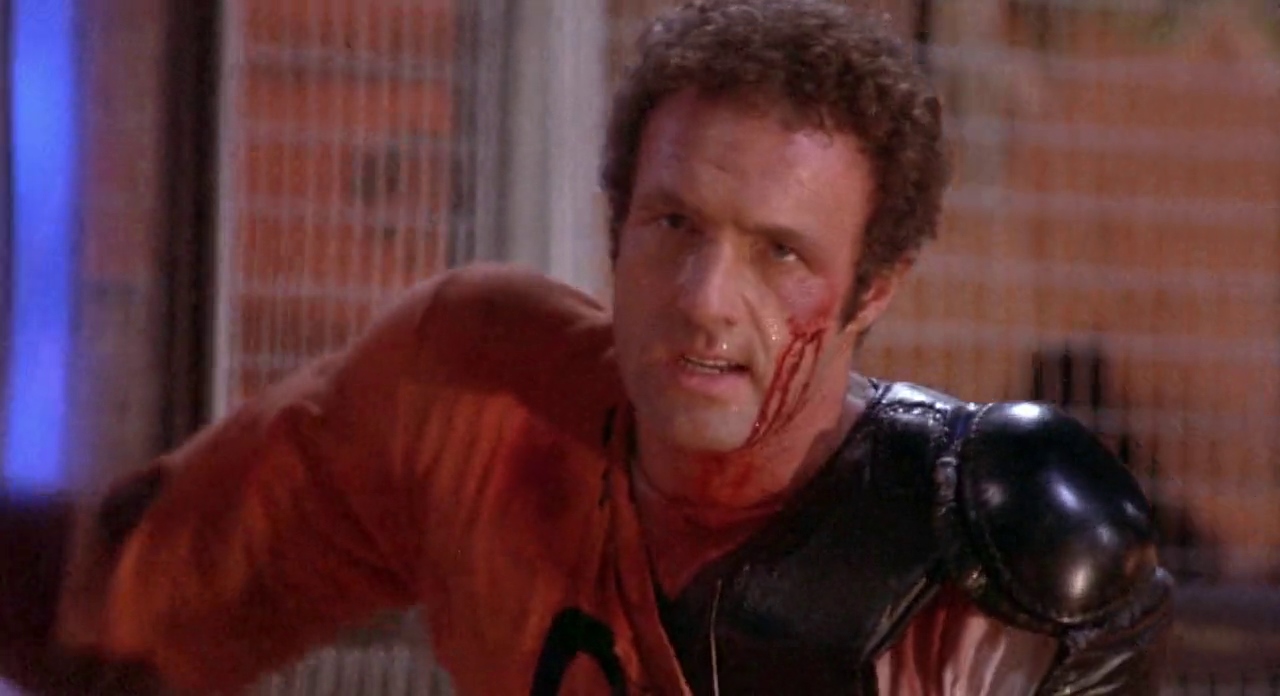
It’s hard not to see the similarities between James Caan’s cool and controlling Frank and his auteur director, Michael Mann who leaves his unique stamp all over this incredibly disciplined production. But any observation at that level is pretty much redundant given the results and what we now know of the director’s MO after this debut. From the opening moments when an inscrutably alive Frank drives through dark Chicago streets that appear to be melting in the rain as it mixes with sparse light, this feels as cohesive and complete a vision as filmmaking gets.
It’s as if the cinematography captures the word on an emotional level and those streets feel alive with danger and risk, from the ominous dark drench to the pale moonlight just about illuminating the back streets near where Frank is in the middle of executing an audaciously planned robbery. We hit the ground running and even as the credits role, we get a sense of Frank’s character as her expertly drills open a safe then throws away everything he finds that he doesn’t want he is only looking for jewels, everything else carries a risk and that’s not in his plan

Mann had been involved in a TV film, The Jericho Mile set on location at Folsom Prison and he learned so much about the life and survival methods of the inmates that it influenced his writing of Frank as well as later work. Frank is as tough as the Chicago streets he, and Mann, grew up in but after many years in prison, sent down for a relatively minor crime but with sentence extended after having to fight for survival, he has learned how to make his way through any difficulty.
Four years out and Franks has a plan to make enough money from specifically stealing untraceable gems and nothing else, to be able to retire and live his life in peace and in the way he wants it. He has been mentored inside by David 'Okla' Bertinneau played by country music legend Willie Nelson who gives an impressive cameo, smiling at his friend with almost fatherly tenderness. He’s the man who has helped give Frank the plan which he has sweetly set out on a montage showing a wife and family, Okla and freedom… Frank’s objectives are strong and he is single minded in strategy and project management with a used car dealership and small bar his cover for the real money making.
 |
| Master cracksman at work |
His heists are meticulously planned and he has an industrial level of knowledge about the tools of the trade and a small team of loyal experts including right-hand man Barry (James Belushi) who helps disable alarm systems and undermine hi-tech security systems. They are the height of professional criminals and made so by Frank’s determination to get out of this game and have the life he deserved. The story was inspired by real-life cat burglar Frank Hohimer’s book The Home Invaders by and the author provided technical advice on the film too… it feels authentic all round.
Franks only a couple of big jobs from being able to retire and, in typical fashion, has identified the woman of his dreams, Jessie played by Tuesday Weld who is also in the form of her life and so far away from her sixties rom-com roots, looking world-weary and still stunning much like Mr Caan! The film’s centre piece is a remarkable dialogue between the couple in a diner, seven minutes during which he lays everything on the line and gives us the vulnerability at the heart of his seemingly impenetrable outer shell: how prison was literally life and death… everything on hold until he can be free. Jessie’s a tough nut to crack, she has her own coping mechanisms, but he wins her over with audacious honesty… I wonder if Mann was being autobiographical here, it’s an extraordinary play by his character.
 |
| Tuesday Weld |
Frank has a lot of ground already to make up with Jessie having left her in the lurch for some hours following a meeting with big crime boss Leo (Robert Prosky who is so good at presenting the sinister through seeming amiability) who wants to bankroll Frank’s career in exchange for a cut of the much bigger action. Franks takes no chances as they meet by the lake side, with Barry overlooking the meet with a high-powered sniper’s rifle but it seems Leo is sincere and is offering bigger opportunities, albeit with higher risk. The whole setting is again magnificently controlled, all darkness and wonderful textures between the water and the city lights… infused with danger and the feeling of life on the edge. The film is full of gorgeous set pieces another being when Frank sits down for coffee and breakfast with a friend and they sit in companiable silence looking out silhouetted against the almost oily surface of the lake.
The film is also notable for the score from Tangerine Dream whose electronica could be seen as another alienating “industrial” element in this tale of criminal business and lives ground down by the wheels yet Froese, Franke and Schmölling imbue their synthesised lines with enough emotion to flavour the narrative undercurrents whilst bringing out a visceral edge with twists and turns over the sequenced uncertainty. They won a “Razzies” award for worst soundtrack but those judges were just way off the beat, I’m a big fan of the Tangs’ 70s output and whilst the studio work became predictable for a while, their scoring was spot on for a number of films including Mann’s next The Keep covered elsewhere in this blog.
 |
| Frank meets Leo in liquid darkness |
Back to the action and Frank’s preparation for his first job for Leo begins I earnest as they look out on the bank to be robbed, asses the scale of the work and the risks to be mitigated. Meanwhile Frank and Jessie try to adopt only for his past to disqualify him with the scene in the adoption office revealing Frank’s insecurity and defiance… he’s “state-raised” and disadvantaged for life, we can see why he’s so driven. Leo steps in to help him adopt through other means and we get the feeling that too much of a debt is being raised…
The job takes place with dynamic shots of the industrial lance Frank has had built to gain entry to an almost uncrackable safe but the real danger is not from his getting caught but the connection and control Leo wants to exert on this rough diamond… how this resolves itself provides for a breath taking, explosive, final sequence.
 |
| On the job |
Dusty verdict: Thief fully lives us to its reputation and you’d search hard to find a debut as cinematic or as innovative and focused as this one. Caan gives a career-best performance and is strongly supported by Weld in particular… you care about these characters really quickly and that leaves you vulnerable to the film’s narrative undercurrents that flow over in the final third.
One for the Blu-ray top shelf!